


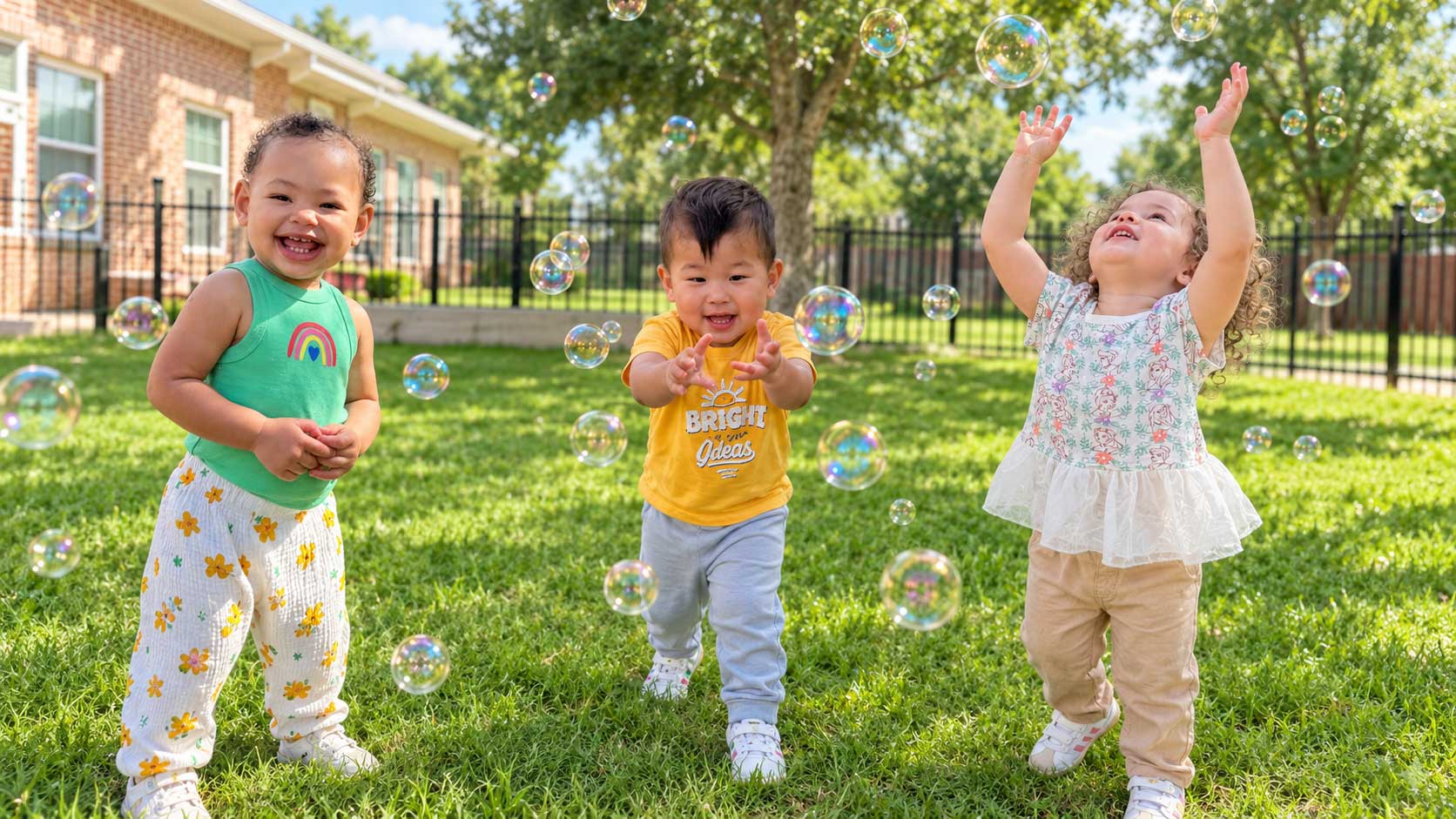
Early learning skills begin developing long before children encounter formal exams, complex mathematics, technology, or career decisions. During the first years of life, children are already learning how to concentrate, communicate, solve simple problems, make choices, work independently, and respond to new challenges.
Montessori education gives these foundational abilities room to grow through hands-on experiences and purposeful activity. A child sorting objects, completing a practical task, working carefully with a material, or learning alongside classmates is doing more than staying busy. These everyday experiences can support the habits and abilities that make future learning possible.
At Happy Flower Montessori Academy, we believe the early years deserve special attention because children are not simply learning information. They are beginning to develop their relationship with learning itself.
Early Learning Skills Begin Before Formal Academics
When adults hear the word “education,” they often imagine books, lessons, worksheets, and examinations.
For young children, education looks very different.
- A toddler attempting to complete a practical task is learning.
- A child sorting objects is learning.
- A child listening carefully to language is learning.
- A child concentrating on a hands-on activity is learning.
- A child discovering how to work peacefully beside another child is learning.
Montessori education recognizes these experiences as meaningful parts of development rather than activities that simply fill time before “real school” begins.
Hands-On Learning Makes Abstract Ideas Meaningful
Young children naturally want to touch, move, manipulate, and investigate.
Montessori materials work with this natural desire for exploration. Children experience concepts physically before being expected to understand them only in abstract form.
This approach can be seen across areas such as mathematics, language, sensory development, practical life, science, and culture.
Instead of simply hearing information, children interact with learning. These hands-on experiences can strengthen early learning skills by giving children meaningful opportunities to explore, compare, repeat, and discover.
That distinction matters.
When children are active participants, education becomes something they experience rather than something that is simply delivered to them.
Independence Helps Build Confidence
Adults sometimes help children too quickly because completing the task for them is faster.
Montessori education asks a different question:
What can the child learn to do independently?
Within reasonable developmental limits, children are encouraged to participate actively in caring for themselves, their materials, and their environment.
They make choices. They complete activities. They correct mistakes. They try again.
This process develops more than practical ability.
It builds confidence.
A child who repeatedly experiences “I can do it” begins developing a very different relationship with challenges. Independence can therefore strengthen early learning skills while helping children develop confidence in their own abilities.
Concentration Builds the Ability to Stay With a Task
Children today are growing up in a world filled with stimulation.
Screens, notifications, entertainment, rapid transitions, and constant distractions increasingly compete for attention.
The ability to concentrate deeply may therefore become even more valuable as children grow.
Montessori classrooms traditionally provide opportunities for uninterrupted work periods, allowing children to become absorbed in meaningful activities rather than constantly moving from one adult-directed task to another.
Over time, these experiences encourage patience, focus, persistence, and satisfaction from completing meaningful work. Concentration is one of the early learning skills that can support children as activities and academic concepts become more complex.
Mixed-Age Learning Builds Social Skills
Children do not develop in isolation.
Our Montessori approach recognizes the value of children learning alongside peers at different developmental stages.
In a mixed-age environment, younger children can observe what older children are doing. Older children can reinforce their own confidence and understanding by helping younger classmates.
Leadership can emerge naturally.
So can patience, cooperation, responsibility, and respect.
Instead of every interaction being directed by an adult, children have opportunities to become meaningful members of their classroom community. These interactions allow early learning skills to develop alongside communication, cooperation, leadership, patience, and respect.
Early Learning Skills for a Changing World
The world our children will eventually enter as adults will look different from the world we know today.
Artificial intelligence, automation, applied sciences, technology, and entirely new careers will continue transforming society.
No school can predict exactly which jobs today’s toddlers will eventually have.
What education can do is help build transferable abilities.
- Curiosity.
- Problem-solving.
- Adaptability.
- Communication.
- Concentration.
- Creativity.
- Independence.
- Confidence.
Developing these early learning skills can help children approach new experiences and changing environments with a stronger foundation
These qualities matter regardless of which technologies emerge.
This is why preparing children for the future cannot simply mean exposing them to more technology. It also means developing the human abilities that allow them to understand, question, create, collaborate, and adapt.
Give Your Child’s Early Learning Foundation the Attention It Deserves
A strong building requires a strong foundation.
Education is no different.
At Happy Flower Montessori Academy, our goal is not simply to prepare children for the next classroom. We want to help establish habits and abilities that support their development throughout childhood and beyond.
For families in Plano and McKinney, Texas, Montessori education offers an opportunity to make those early years intentional.
The future may change dramatically.
But children who know how to think, learn, communicate, adapt, and believe in their own abilities will enter that future with something extraordinarily valuable.
By giving early learning skills meaningful attention during childhood, families can help create a foundation that supports learning well beyond the first classroom.
A strong foundation starts earlier than most people think.
Plano location & contact:
📍 913 Lexington Dr., Plano, TX 75075
🌐https://www.happyflowermontessori.com/
McKinney location & contact:
📍 3801 Alma Rd., McKinney, TX 75070
🌐https://www.hfmontessorimckinney.org/
📞 +1 (682) 351 9492
Leave a Reply